Showing posts with label biblical. Show all posts

Tuesday, February 5, 2008

viva minus 16

I truly don't know where the days go.

Yesterday started great, but ended with a big headache. Still, as days go, it was a really good one.

What I want to focus on today is why "I knew you could do it!" can feel like the opposite of an "attaboy!"

On the one hand, it's nice that people have confidence in you. On the other hand, if everything you undertake is a 'done deal', then there's no sense of accomplishment. I think that this is what people tend to overlook when they say: "I knew all along there was nothing to worry about - you were just being ridiculous to worry so much!"

I'm not a worrier by nature. But this doctorate was - and is - no 'done deal', and I kind of resent the implication that it was/is. Even as I can also recognize that the people who so imply, probably do so under the [false] impression that they are thereby building my self-esteem by stating their supreme confidence in my abilities. It's a delicate balance. Confidence in the outcome, but still preserving the real challenge presented and the real precariousness of success! If success is a given, how can there be a real challenge?

I see that we're back to conflict, and the need for conflict in any compelling story. The trick is to somehow preserve the "I had no doubt" while at the same time being able to experience all hope fade.

Which leads me right back to the question of "faith".

I think I mentioned yesterday that we've been reading the book of Hebrews - chapter 11.
What is faith? It is the confident assurance that what we hope for is going to happen. It is the evidence of things we cannot yet see. . . . [keeping our] eyes on the one who is invisible.


Funny, because elsewhere it says that "without faith, it is impossible to please God", and I think that this is part of the same question I'm struggling with. Just maybe the other side of the coin. God wants us to have confidence in him, in spite of the real adversities; I'd like acknowledgment of the real adversities I've faced, in spite of my family's confidence in me.

[and OK, just so you know, it's my mother we're talking about here. As far as she's concerned, there was never any question at all about my ability to do this - her only question is why I've been dawdling so much, getting it finished.]

Like I said, it's a delicate balance. I could be facing the other side of the coin, the "I don't know why you even try, you'll never succeed!" Which reminds me of a favorite C.S. Lewis quote, to the effect that we are like the drunk man who climbed on a horse and fell off one side, and then climbed back on only to fall off on the other side. . . . There's plenty of room for error on either side of this narrow path!

Monday, February 4, 2008

it's my birthday

. . . and it's already been quite a day!

Somehow, my birthday has gotten shoved into the annual Superbowl gathering - which I really don't mind, as I enjoy football - but it can leave the actual day a bit empty, when the celebrations are already in the past tense.

Today has already been quite a day for me though. We started with the usual: coffee with the king (he added cinnamon - which he knows I love - as a special treat), and at some point the impression of Psalm 112 fixed itself firmly enough in my mind that I felt confident that that was what we should read together this morning.

Fine. Because other than that, we were about to take on the martyrs in the book of Hebrews [the second half of the chapter on faith, chapter 11. . . .] and I really didn't have the heart for that on this festive day.

Anyway - Psalm 112 was about the good stuff that follows from being on good terms with God. The two ideas that really stuck with me as 'for me' today were: "trust" and "you won't be afraid of bad news".

Very well then!

The first thing I saw when I checked email (beyond several birthday wishes emails) was an email from Magda. "First comments", it was entitled. I clicked to open it before I could work myself up into being afraid of bad news. Magda reports that the internal examiner told her that both he and the external examiner thought my thesis "very good." She wanted to pass that information along so that my viva preparations would be a bit more "light-hearted". . . .

So now I'm worried that once I get in there, they'll realize that I don't really know a thing and that this dissertation (which I have yet to re-read) was somehow achieved as if by dictation and that everything I wrote escaped my mind the minute it was put down on paper!

No - not really. But I have not been preparing the way I know I must, and this good news - although really good news - is not going to ease me out of preparations, it should actually make me work even harder. Now all I have to do is figure out where we are again on the countdown. That'll strike terror into my heart, eh?

Oh no, that's right: I will fear no bad news.

Isn't it strange not to be working out of fear? That doesn't mean I won't ever get bad news, it means I won't fear it. . . . Yet I realize now that fear has served as a major motivator in my life. What shall be the replacement, do you think? And isn't it funny how many of us work off of fear throughout our lives, and yet how often have I heard people claim to be turned off from God, because they're offended by talk of fear of hell. . . . or by a "religion" that supposedly tries to use fear as a motivator.

But is not fear almost the universal motivator? Think of our advertisements. What do they prey on, if not fear? Fear of death. Fear of hunger. Fear of growing old, getting wrinkles, losing one's attractiveness, being alone, smelling, having split ends or gray hair, being constipated, getting sick, having high blood pressure, low self esteem, losing erections, having a tree fall on one's house or car, getting audited - I mean, you name it! Even the Superbowl commercials yesterday can be traced back to fear. Bridgestone's screaming squirrel, and the tires that allay the fear of death and squashing a lovely furry critter. Budweiser's Dalmatian training the Clydesdale and overcoming a fear of failure. The laundry detergent (was it 'Tide'?) that presented itself as saving us from rejection and shame by silencing the "talking stain." Doritos' attacking giant rat. . . .

Fear and "protection". Start counting the number of products or services or companies that claim to "protect" us. At the same time, consider just what it is they would be "protecting" us from. . . . I've been amazed at the sheer protection racket going on.

Anyway - just to get back here: it's my birthday, and I'm a very happy prophet today. I trust God and I fear no bad news. I think I'll go to the greenwood and have a walkabout. At some point, I'll recalculate the countdown number - not because I'm afraid - but so that I can recalculate the work that needs to be done, and allocate the days properly.

I do hope that there's some champagne in my near future!

Many happy returns to all of you.

Tuesday, January 8, 2008

another day. . . .

It is as I suspected.

Today is another day. A better day than the one that ended yesterday, but maybe that's just because the day is still mostly ahead of me, and I still see hope and promise in it. Whereas yesterday was a bit of a trial, and - finite ridiculous person that I am - I am not able to see the benefit of trials and other beset-ments. . . .

At the same time, I am dimly aware that it is these very besetting difficulties endured, that has made me who I am. How is it that we are most shaped by difficulties, rather than by whimsies and delights? But perhaps there is someone who can make the case for character-shaping delights?

No?

I thought not.

Hedonists seem always hedonistic as a remainder - namely because it doesn't really "matter" so you might as well enjoy yourself - rather than as a goal. The "teacher" of Ecclesiastes did pursue pleasure at one point in his quest to find meaning, but found none there. Of course, he found none - really - anywhere else, either, in human pursuits anyway. . . .

WARNING: I suspect theological content lurking ahead. . . . a premonition, perhaps, from the Ecclesiastes reference that sprung - unbidden - to mind. But maybe not. We'll have to see, eh?

Now. Where was I? Right: better day. Or another day, anyway.

I'm coming back around to "good"/"bad" orientations in a philosophical and theological sense. Isn't it quite amazing to consider the judgment involved in saying whether a day is either "good" or "bad"?! I, who have neither made nor contributed to making [or receiving] any day at all, presuming to judge in advance? Or even after the fact!

Quite astonishing.

This is not to say, however, that the exercise of "judgment" is "bad". I have little time for people who mouth the "Who am I to judge?" platitude, when talking about lying, cheating, stealing, killing, even plain old simple bad manners - etc.

I'm just saying that it might a good idea to consider my framework as I judge, and to recognize my limitations. I am fully capable of judging - and condemning - rudeness, violence, cruelty, manipulation, all sorts of things, under the appropriate circumstances. But there are perhaps times when that judgment is better suspended, like perhaps when I don't what I think I want right now, or even when I don't get to go to the islands as usual [poor pitiful me], or - more seriously - when suffering; sickness; violence; rejection. Or maybe it's better for me to say that - rather than suspend judgement - I should be open to seeing also what good can come out of even the "bad".

I am NOT in any way here arguing [as apparently Paul's audience did in - ah - the book of Romans, I think it was] that we should go out and do evil so that good will result!

Suffering and the problem of evil is the philosophical fault-line where it seems all thought systems break down. . . .

Consider this: the tree that caused all the trouble in the garden of Eden was the tree of the knowledge of good and evil. Interesting, eh? "Knowing" evil - at this point - I can't imagine not knowing it. . . . And therein is perhaps one way of understanding the "death" promised to any who ate from that tree: namely the death of the not-knowing.


Well! That'll tie my thoughts up in knots for a while! Better get moving, I think. I have a weathervane to order - and finials. Here's the weathervane we've chosen - the banner. I like it!

It's a whimsy.

Not character-shaping.

But perhaps an indication of how that character has been shaped?

[to be continued. . . .one day. . . .maybe. . . .]
P.S. I have nothing against pleasure. In fact, I like it a lot! Further, I think that how we deal with pleasure is one of the "church's" biggest fault-lines where they break down. Chocolat is one of my favorite movies. Not because it's anti-intellectual (as the reviewer seems to think is necessary, in order to enjoy sensual experience) but because it does not deny the wonderful pleasures of food, drink, taste, laughter, music, love, dance. . . . I begin to think that religious "worship" is very puny indeed because they don't "get it" - but that leads to another whole big discussion, fraught with the danger of (you guessed it) empty hedonism. Full circle. We're pretty much right back where we started.

But the danger of hedonism is way too much for me to take on before noon.

Thursday, December 20, 2007

not reading PostSecret - part two


A few days ago I wrote about why I'd stopped reading PostSecret, concluding that it's grown past its initial positive impact, and is in danger of moving into scandalous voyeurism, if not also normalizing shameful behavior.

PostSecret Frank ("Yes, that Frank." as he assured me) weighed in on the matter in comments:
Thanks for your thoughtful comments.
Funny, but I really didn't expect to hear from him. It never occurred to me that he'd be interested in reading why I don't read PostSecret anymore. The jaded bit of me thinks:
All publicity is good publicity.
and:
Of course he'd be interested, if only as a blueprint to attract more readers! Knowing what not to do is almost as good as knowing what to do. . . .
But no. I think Frank really is interested, because I think he started this project with a good heart, and for a good purpose. It's taken on a life of its own, though. I wonder if he'd noticed? Perhaps he was beginning to feel a bit uncomfortable with where things were heading?

I can't help but wonder if it'll make a difference. But no, I still won't be reading it anymore. I don't think there's a way to retrieve this, once the feeding frenzy of public guilt assuagement has commenced.

Lee Anne makes the insightful point that, "by sharing [public confession], you're dispersing the burden of responsibility/guilt."

WARNING: explicit theological content follows. Proceed at your own risk.

It seems to me that we might get some insight into this phenomenon by looking at the role of confession in Christianity. The Catholics, of course, involve another human being in the process: the priest. But the contents of the confessional are held in strictest confidence. (we've all seen examples of that, if no where else, in Law & Order and CSI, where the priest knows whodunit, but can't say because of the priest/penitent rules of confidentiality. . . .)

Alternatively, there's the "group confession" that takes place in the formal order of service, where everybody recites their individual and collective guilt of grievous offenses - but note: no details are given.

So, from the Christian side, confession is dealt with corporately (no details disclosed) and/or privately (where details are given, but then never referred to again). The cleansing agent is Divine forgiveness: the "do-over" and fresh start.

We see a different dynamic in the thought of Nietzsche, of course, as well as Sigmund Freud. There, ultimately it is the feeling of guilt itself that is attacked, rather than the erasure of guilt by the transcendent Creator. Where there is no guilt, there is no need of forgiveness. That requires, however, that we undo what we have held to be wrong, or bad. One way of doing that is to rehearse the disclosure of "bad" actions without attaching a corresponding condemnation for the act. Instead, we applaud the disclosure itself as "brave". Eventually, it appears the hope is that the underlying "bad" act will cease in our minds to be "bad."

There are a lot of variations on this theme, but this is enough for my present purposes.

For myself, I think I'd rather work on forgiveness of my bad acts, rather than working on dismantling my ethical convictions so that I won't notice my bad acts - or ultimately find in them an opportunity for pursuing cyber-celebrity by disclosing them in the most entertaining or artistic fashion, hopeful of being selected for publication in PostSecret. . . .

And now note this important DISCLAIMER: this is no way implies that all people submitting "secrets" to PostSecret are "bad" people, or that they're attempting to dismantle their ethical systems, or that they should rather go to a Catholic church and take advantage of the confessionals there (or an Anglican one, and confess "corporately"), or that Freud is a fraud, or that I don't like Frank ("yes, that Frank.").

It is an analysis of what seems to me to be the changing face of PostSecret, and thoughts on questions of guilt and how to be rid of it.

I'm glad you found my comments "thoughtful", Frank. I found them rather disturbing, myself.

best wishes,
prophet.

Monday, November 26, 2007

mostly words

[WARNING: explicitly religious content, including anti-institutional/denomination rant]

Before Thanksgiving, I was struggling with how to give voice to my increasing antipathy towards an increasingly offensive aspect of evangelicalism.

It kept coming out just nasty and critical, however, so I heeded my grandmother's advice and "since I couldn't say anything nice, I said nothing at all."

I've experienced several other examples of what's bothering me since then, though, so maybe today I can actually start to talk about it, without belaboring and humiliating one poor example as indicative of "THE LARGER PROBLEM."

I have 3 examples now.

1. The original example, a blog that purports to be a place to "discuss" worldview, religion, philosophy and culture, but which instead appears to be more an evangelical site for propaganda. There's no discussion. The few "nonbelievers" who stumble into the place are promptly ganged up on with the "accepted arguments". The ones who actually try to discuss the "accepted arguments" are largely ignored or dismissed.

2. A friend of mine, of evangelical persuasion, emailed me this, an ACTION ALERT that asks me to TAKE ACTION and shop at Wal-Mart instead of Target this Christmas, in order to "defeat" the "homosexual challenge to traditional marriage."

3. A Virginia megachurch is "expanding", through "outreach", and seeking to rent the Uptown movie theatre in Washington D.C.'s Cleveland Park for Sunday morning "services". The problem? Few - if any - of Cleveland Park's residents would be attending, and there is no parking for the additional minimum 400 cars that would be bringing the outreaching "worshippers" into the community. Round one went to the residents, as you may read the Washington Post, here, but the McClean church is not giving up. Ironically, they call this process "community campus development". According to the Washington Post article, their fearless leader explained: "I should have known that Satan wasn't going to take this lying down. We're going to fight, and we're going to let the Lord Jesus open the door."

Now that's a way to foster community!

It rather sounds like the attitude of the settlers towards the American Indians. . . .

I don't think I'd mind so much if this was about a bunch of Christians who lived in Cleveland Park and wanted a place to meet on Sunday mornings, in groups larger than living room-sized ones. Neither would I be offended if this was about actual Christian people actually moving to Cleveland Park and looking for a place of worship. And I'm not offended by people talking about what they believe. Free speech - remember? I take it very seriously. Just as I take the freedom of religion seriously.

I find it wierd that a church would want to rent a place in an area where none (or few) of its members live, so they could travel there on Sunday mornings at the considerable inconvenience not only to themselves but also to the people who already live there, so that they can make a show of "outreach" and so-called "worship" - and call it a "community campus."

Is it just me, or does this strike you as a bit strange? It seems to me that the new denomination - Evangelicalism - is more about ideological expansionism and warfare - and not about "winning" hearts and minds, let alone facilitating the changed lives that result when Jesus is involved. This is all about games, showmanship, and one-ups-manship. It's the equivalent of territory scent-marking or counting coup. You either live there or you don't. Stop making forays to piss and leave "Kilroy was here" messages for the devil!

I don't much like it - and I can imagine how the Cleveland Park residents feel.

Neither, however, do I like the unthinking command to link shopping at one particular store as indicative of the merits of traditional marriage or the morality of homosexuality. Hello?! Why not a little trial by combat instead? Or maybe a little witch-dunking? Divination or casting lots anyone?

As for the worldview discussion site, I expect that at one point the "moderator" will discover that he's less about discussion than actually trying to establish his own worldview and getting others to buy in. Let's face it: he doesn't want to talk about the worldview of an atheist. He wants to change it.

Monday, November 12, 2007

patience and genius


Michelangelo is reported to have said: Genius is eternal patience.

The story of his sculpture of David as a young lad is remarkable. It was done using a piece of marble that had been discarded by another sculptor as (as I recall) flawed. It had already been cut into, though, and thus compromised. It's been years now since I've read the story, but I recollect that the huge piece of marble lay outside, abandoned to the elements, for years, before Michelangelo was finally allowed to take charge of it. Where others saw ruin and failure after a brief - and now-ended - beginning, Michelangelo didn't give up. I understand that it was the very flaw in the stone that prompted part of the positioning of Michelangelo's David, and which is part of the "genius" of it.
Genius is eternal patience.
Sounds like another glimpse of the lesson of the ants.

. . . . and Churchill's "Never give up."

. . . . and this morning's reading in Matthew about asking, seeking and knocking - and continuing to ask, seek and knock, because those who ask get answers; those who seek, find; those who knock, have the door opened to them.

The difficulty is the bit in between. The lag-time between asking and getting, seeking and finding, knock-knocking and the 'Who's there?' opening. But that's the whole point, isn't it? If you won't endure the lag-time, you won't get to the genius bit.

I'm lagging a bit in the lag-time part.

But soldiering on, best as I can. Trusting.

[sigh. That's the life of faith, now, isn't it? OK, then. I feel better.]

Sunday, November 11, 2007

Sunday - unrest day. . . .

OK, so I guess our day of rest was yesterday. It was certainly restful! I posted over at the greenwood, along with some pictures.

Here's a picture of a stripey feather we found, walking in the woods.

We don't do a legalistic day of rest, but we do try to have one. If we don't, things start sliding into the ugly p.d.q. Truth be told, we usually try to have two days of rest: Saturday and Sunday, but things don't often cooperate to bring that about. So yesterday was rest day with a nod to the Old Testament and a Saturday "shabbat" or "rest."

Today is the more "Christian" version of what seems to me to be hyper-activity with the family get-together and meal - although we do not do the attendance at a designated "house o'worship" as well.

Interestingly, the orthodox Jewish Sabbath rules would prohibit much of what goes on in "typical" American evangelical Sunday activities. For one, there would be no driving to the "local" megachurch - which is often up to a half hour away from the average attendee - as the Sabbath restricts travel to walking, and limits the distance, at that. Electric already on may be used, but there's no pushing of buttons so sound-checks of "worship bands" are out and I'm not sure about amplification, generally. . . . There would be no selling of Starbucks coffee in the lobby or foodcourt lunches in or out of the mega-option.

Ah. Don't get me started.

Anyway: for today, I have already turned the oven on, so I'm in violation of the electricity use mandate. I expect the television will also go on at some point: football! I have kitchen duties to perform: double baked tates and green bean casserole. My brother is in charge of the steaks - we're driving an hour to his house (well past the Sabbath distance) - and my parents are doing salads and desert, I do believe. No one mentioned bread. . . . and I imagine we're in charge of wine, as well.

The king left early to do his Sunday duty by his mother: store and prescriptions and "the visit".

I have to go open megacans of green beans and slop it all together into a tin foil pan with lid for transport. Then, when the tates are cool enough to handle: excavate, smash, dollop up with butter, milk and cream cheese, season, and refill - placing in additional tin foil pans with lid for transport.

I'm hungry!

Friday, November 9, 2007

quote-Christian-unquote

My friend Nonessential Equipments posted a cutting indictment against the religious, which she entitled "Good Old-Fashioned Christian Values."

She doesn't say a word against Christians, mind you, she reports a conversation overheard in which a so-called Christian [quote-unquote] is annoyed at "having" to pray for someone who doesn't go to her church and might not even be a Christian. Like I said, it's a scathing indictment, because I have heard so many similar conversations and suspect that many people who might not actually say this, do think it, completely blinded to how UNchristian the sentiment proves itself.

The problem is that so many "christian" "churches" have turned prayer, worship, study, meditation, etc. into events; something you do or schedule, rather than forming part of your life. So we get prayer requests that are not based on any actual relationship, but which are instead based on a sense of obligation, offered in a performance spirit. By that, I mean that people seem to try and outdo one another coming up with people and/or maladies, tragedies, and other assorted travesties to pray for. I learned long ago not to bother with trying to keep up with supposed requests for prayer that did not resonate with me. I refuse even to write them down. If my heart is right about it, I'll remember without having to make a list and check it twice.

Further to my last posting, I actually read Matthew 6 this morning, and (besides ordering no worrying) it also talks about 'not doing your good works before men', to include giving and praying.

Elsewhere, I recall that it says that "God loves a cheerful giver." I think we might extrapolate the concept to include prayer. I shudder to think of grudging prayers under a spirit of compulsion. . . .

Now, if I can only stop worrying about what people will think of me because I don't play along with the pious prayer-"warrior" part. . . . (And actually, that's one of the reasons I don't write "prayer requests" down anymore. I found I cared too much what other people thought, and too little about what I was thereby implying: namely that I was going to be praying for all these people I'd never heard of.)

Every now and again, I do feel moved to pray for people I don't know. But generally I find it a whole lot easier to pray for those I do know, for help in circumstances I'm aware of, involving other people I might even know. You know what? If we all pray for those we know, who we know are having a hard time, maybe everything that needs to be prayed for will get prayed for. I can't help but think of Neil Postman's Amusing Ourselves To Death - in which Postman (among other things) points out the deadening effect of reporting as unconnected "news", events from the other side of the world, which we have no hope or expectation of being involved with. It accustoms us to seeing events that seem to require action, but which we are too far away to do anything about. We get to the point where we learn not to do anything even where we could do something.

So: to the ungracious "Christian" who doesn't want to "have to pray for 'R' " (who has a lump in her breast): by all means, don't pray. In fact, maybe you should slow down on all the prayer stuff for a while. Maybe God will help you, and eventually give you something you really want to pray for, so you can learn all about it.

Unfortunately, those lessons are expensive. . . .

Sorry.

Wednesday, October 17, 2007

and a bit of music. . . .


a little Sarah. . . . Who says it so well. And yet, there is redemption.

Thursday, October 11, 2007

minus 13. . . . still dark


ok. . . so it's going to be a tough one. Feels like I'm in labour - although I've never been in labour.

It feels horrible.

Reminds me of something my father used to say:
That's the only good thing about hitting yourself in the head with a hammer.
and to the inevitable question: "What is?" he'd say:
It feels so good when you stop.
What a strange thing to say, don't you think? Wonder where he got it?

I do know the goodness of 'pain stopped', though. sigh

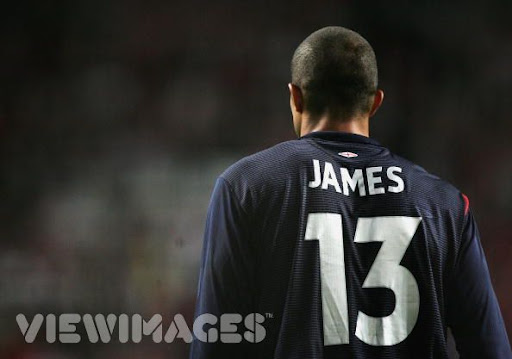
When I found this picture I decided to check what the book of James might have for me. There is no James 13, so I looked up James 1:3 and found (coming from verse 12 before):
Consider it pure joy whenever you face trials of many kinds because you know that the testing of your faith develops perseverance.
Great. Perseverence.

Right. That's what I need.

More of that.

Oh help. . . .

Tuesday, October 9, 2007

minus 15


In which our hero snatches 6 hours of sleep from the jaws of worry and returns to her scarred and battered computer, refreshed and ready to face a new day! A day of tough stuff, but a day, too, of important endings: Chapter 5 put to bed.

I sent the lion's share of 5 to Magda last night - ok, this morning, just before dawn - leaving only the last section 3. c. to be written. What might the religious voice bring to the public discourse? Hope and meaning. This, following the later thought of Paul Ricoeur, once he finally integrated the religious with the philosophical, having kept them apart for so many years.

The difficulty here, of course, lies in the anticipated disconnect between the believer in God and one who does not.

A further difficulty lies in the anticipated use of the religious voice to proselytize, rather than bring the missing elements of hope and meaning to the table. So I do not mean the encouraging of those who do not believe in God to "repent and be saved." This is not a question of "fixing" the content of someone's belief. It is the theological embodiment of the redemptive Kingdom of God drawing near to people.

Wha. . .?!

It is the living and acting out of theological motifs called Creation (1), Fall (2), Redemption (3), and Consummation (4).

It's what we know as (1) the world as it should be, (2) the world as it actually is, (3) the world as we can change it through forgiveness and do-overs, and (4), the world as it's gonna be when everything is perfected.

(and for "world" we can also substitute "person").

OK! Reality check: I have just turned away one "Leon", who presented himself at my door - just this minute - wanting gas money to get to Washington D.C. . . . sigh. What would the 'religious voice' have to say about that? (My secular/worldly voice keeps getting up and looking out the window to make sure he hasn't stolen the candlesticks on the porch. . . . He's apparently visiting all the houses on our little square. How would the theological motifs apply in this case?

Well - the pious/liberal answer might be to have given him money. Poor guy! He's 'disadvantaged', clearly. The jaded-conservative answer might be to tell him to get a job like everyone else (but then again, I don't have a job - or a paying job, anyway), or refuse giving him money on the grounds that he will likely use it just to buy drugs. I've been lied to before by panhandlers. And one amazing thing I discovered is that - much as many people don't actually "see" a beggar (even if they give him or her money) - so, too, many beggars don't actually "see" their targets. What they seem to see instead is a moving purse or wallet. I was quite taken aback by this.

But what is the "religious" answer - the answer that brings hope and meaning to a world where there are people on the streets knocking on doors asking for money? Claiming need.

I'm not sure exactly what to say. And I've always hated the answer "It depends." But: It depends.

It depends on the person, it depends on the circumstances, it depends on my own willingness to be uncomfortable with the world as it is, while yet persevering in the hopes to make it what it should be. With Leon, I see a stepping outside of relationship to solicit, apart from either relationship, circumstance, or institution. Requests for help are generally done either relationally (those I know, live close to, or am related to), circumstantially (stopping to help an accident victim or lost child, for example), or institutionally (unemployment insurance, welfare, job training, local church or civic group).

Leon appears to be taking a lesson from the bank robber who, upon being asked why he robbed banks, replied: "Because that's where the money is."

OK - so maybe Leon just happened to find himself in this neighborhood, on his bike, with an immediate and pressing need for money for gasoline . . . . But chances are he did not. Chances are he 'targeted' his approach, picked the nicer-looking houses (OK, I often refer to our little rental house as the "ugly" house on the street, but you know what? Even as people say "Oh no - it's not ugly!" everyone knows exactly which house I mean, when I say we live in the ugly house. It doesn't help that we live across the street from a mansion that is on the historical register and is a stop on the local tour bus circuit. . . .). Anyway - back to Leon - . . . . chances are he picked the nicer-looking houses and handed me the toss-away line "You don't have anything I could do?" as I said "Sorry" and went to close the door, thinking the offer to work would sound better than just asking for money. It almost worked. I almost relented and asked him to water my flowers which are wilting again. Still no rain.

But back to the problem at hand. Maybe the question of 'hope and meaning' here is not tied to the problematic that Leon tried to hand me: He wants money. From me. Now.

Maybe the question of 'hope and meaning' here is actually about why Leon is out, knocking on doors, asking for money, instead of engaged in living a good and rewarding life in which his needs are being met and he has been given good and meaningful work to do? But that's not the question he presented me with. I suspect he would not have been willing to investigate the matter more deeply, either. Not unless there was some money to be had for his troubles. . . .

Jesus' attitude toward those that wanted his help was pretty wild. When confronted with a lame man at a religious shrine-type-place (a pool of water, actually) which is where all the sick apparently went to hang out and beg, Jesus asked him: "Do you want to get well?" Funny thing: the man didn't actually say "yes". What he did do is give excuses for why he hadn't been cured so far.

And then there was the blind man whom Jesus asked: "What do you want me to do for you?" Now there's a question for you!

What do you want me to do for you.

I wonder what Leon would have said, had I asked him that? And maybe that's where the "hope and meaning" part is, the fact that we so easily settle for so little. C.S. Lewis said it well:
We are half-hearted creatures, fooling about with drink and sex and ambition when infinite joy is offered us, like an ignorant child who wants to go on making mud pies in a slum because he cannot imagine what is meant by the offer of a holiday at the sea. We are far too easily pleased.


Imagine what we would say in answer to the question from one who could do anything: What do you want me to do for you?

I wouldn't ask for five bucks. I wouldn't even ask for five thousand.

Wow. That's the question. What would I ask for?

Sunday, October 7, 2007

minus 17


Sunday.

Football.

Chips.

Bean dip.

Indigestion from dealing with this guy Robert Audi who argues that "Civic Virtue" requires that people who have religious commitments and convictions not speak of them in public. ALSO that there may be times when the aforesaid "Civic Virtue" could possibly apply in private to put a muzzle on religious thought and language, insofar as "civility is a virtue applicable far beyond the public square." Thus, even though he says that “our homes are supposed to be our castles”, he envisions situations where we can’t say what we like *in our own homes* because of his idea of civility.

I am not making this up.

He would put the same muzzle on religious institutions: churches, hospitals, and schools. They should continue doing what they’re doing to help the secular folk - God forbid they should stop - but they should stop talking about God while they do it. They might offend someone. They might get into an argument. It’s not ‘right’ to tie efforts to “relieve famine abroad” for example, to one’s conviction about God’s caring for the poor, or edict that we - who have so much - should SHARE.

When Mobile Oil gives to PBS you can be sure we hear all about how great Mobile Oil is; why should it be any different when Church X or Hospital Y give? And if they wish to give the credit to the God they profess to serve, is that not their prerogative? Why is it only the “religious” who are to be muzzled? Oil companies, business gurus, starlets and weight loss companies can say whatever they like. Free love and abortion-“rights” activists can talk all they like, but those who favor sexual monogamy with one’s spouse and believe a protectable life begins at conception must be silent if it has anything to do with their religious belief.

Oh: and we don’t need to talk any more about marriage for homosexuals: those that oppose it because it is ‘outside of God’s plan’ do so on religious grounds that they can’t translate into secular speak, so they need to go home and not talk about it there, either, because to do otherwise would be "uncivil".

Now there’s a way to prevent violent disagreements! Shut down one side.

The funny thing is that he doesn’t seem to think that this is in any way unreasonable. The even funnier thing is that at one point he uses a religious argument to make his point! Check this out:
If, as Jesus taught, to look at another lustfully is already to sin in one’s own heart, perhaps we can also do wrong in our hearts by harboring certain kinds of dispositions toward conversion of others, such as a tendency toward a kind of manipulative conversion that we would not like someone else to use on us.
(oh: that was in his argument against proselytizing and how rude that is. I mean, how horrible is it for a parent to hope that her child might "see the light" one day, and stop using drugs, sleeping around, and get a job and a life - and some meaning to live! Right. Mustn't have that. Mustn't give the impression that there's anything wrong with destructive promiscuity, eating disorders, drug addiction, lying and irresponsibility. Mustn't harbor the hope that maybe insight to a religious [oops! sorry!] faith might put them on another path. . . . But I digress. Back now to my "logical" argument)

Besides the above quote violating his own argument that he shouldn’t use religious argument in public, he mixes up his metaphors, confuses questions of sin with intent, and attempts to equate any unspoken intent with sin. I also noticed his own “manipulative [attempt] at conversion” by means of an indirect reference to the golden rule, which he must figure will indirectly help manipulate Christians to believe his message that they ought to keep their religious beliefs silent.

And why?

He doesn’t feel any corresponding need to keep his belief silent, now, does he?!

I find this absolutely amazing. I would not be one to advocate public preaching or haranguing. But I also would be one to take the free exercise of religion - and free exercise of speech - very seriously. For myself, as well as for others.

This is part of what I’m writing on today, on day minus 17: The silencing of the religious voice in the public square. Granted, use of religious reasoning is probably not going to be effective with those who are ‘losing their religion’ (as the song goes). But that’s no reason to gag the religious before the fact! They have the right - as does everyone else - to say what they feel, think, or believe, within narrowly drawn exceptions involving immanent incitings to riot, ‘fighting words’, and pornography.

On what basis would we think to treat the religious differently than the non-religious?

This just makes me angry.

But I uphold his right to say it.

Even though I think it’s STUPID!

Back now to my regularly scheduled activities: which, right now, is the attempt to write up a treatment of this nonsense in which my exasperation at the STUPIDITY of it doesn’t show. Hence, this rant.

I feel better now.

[how about a little REM - Losing My Religion - while we can still talk about it]

Sunday, September 30, 2007

whadja expect?


Inexplicably, Jesus' question comes to mind:


What did you expect?


He asked it about John the Baptist and - more importantly - he asked it of people who went out into the desert to see him.

"What did you go out into the desert to see?"

I ask it this morning about those who come - or don't come - to see me.

Funny. I get lonely. I want people to come and talk to me here. They don't normally. But that's ok too. I confess, though, that I think about what might draw people here. . . . Funny stuff. Provocative stuff. The Buzzzzzz. . . . . Being "in". Knowing the lingo and what you're supposed to do - or say.

Or not say.

What you can confess to feeling, and what is just too outre to even mention, let alone own up to.

I think I get it wrong on just about every count.

This morning, I checked out the biblical reference that had come to mind above - it's in Matthew, 11th chapter, verse 7 (and following). The interesting thing to me, was that I hadn't remembered that Jesus asked people who had gone into the desert to see this guy. It's different, isn't it, when you get a guy like John (kind of a wierdo, by all accounts, at least with respect to clothing and dietary habits) coming out of the desert and showing up at the local mall. But that's not what happened. They went to him, in his solitude; his 'desert' - or eremos in the Greek. A "lonely, desolate, uninhabited place" - when used of a place; "deserted by others, deprived of friends, kindred and acquaintences" - when used of a person.

I'm sorry I'm not more entertaining. . . .


I am eremos.

Perhaps it is a necessary condition for propheting.

Sunday, September 23, 2007

WARNING - explicit religious content

I feel it only fair to warn you at the outset that this post will contain explicit religious content and/or reasoning. "Will contain", because I haven't written it yet - but I PLAN for it to so contain, so do we have to wait until the end to see if it actually does or whether I am able to express the same message without the use of the religious? hmmmm. . . could I? [make the point without reference to the religious, that is] And if I could, would I remove the warning I started out with?

Never mind! OK - launching right in: C.S. Lewis makes a really cool point in The Screwtape Letters that - for both God and Satan - one's circumstances are largely viewed as "raw material." (and I am sorry - I find I can not immediately give you the quote as I can't find it quickly and don't want to take the time to search for it. . . . Sorry! Not very academic of me, I know. One day, when this dissertation is done, I intend to assemble an index for The Screwtape Letters. I can't tell you how often I spend a hour or two, scanning the thing, looking for a remembered example or story!) Raw material, that is, either to make one more at home in one - or its other - of the two possible eternal dwelling places.

Apologies here - if required - to those who do not believe that there is a post-physical reality in store for us. I did warn you. . . .

And here we might also conduct a brief excursion into questions of the nature of the duality of the two possible destinations. . . . Is it divided by good versus bad? Preoccupation with self versus care for others? A vision of reality as human-centred versus transcendent - wait for it - God-centred?

As interesting as that is, however, what struck me this morning was (1) the need to warn in advance if you intend to use this type of 'religious' reasoning and (2) the fact that it is only in the 'religious' that one would find this kind of thought (namely: that circumstances aren't just circumstances - and the relevant inquiry being what the circumstance is and how can I change it/overcome it - BUT that circumstances HAVE PURPOSE in and of themselves. Perhaps it is a purpose of which I am unaware, but it is a purpose nonetheless. AND that that purpose is to better fit me either for one destination - or the other. Here, I would also add that 'free will' has something to do with which one of those destinations might come into play. . . .)

If you believe this, does this not make a really big difference in how you would then respond to the circumstances in your life? As well as the circumstances you see that appear in others' lives? Your children's? Parents'? The neighbors', rich man's, poor man's and sick man's circumstances? (yes. I realize that proper academic style would have required me to insert at least one feminine in this paragraph, but I really didn't want to deal with it, nor to decide whether the feminine would be assigned to the rich, poor, or sick adjective. That is an adjective, isn't it?)

Back to circumstances. Is this perhaps just a fatalistic way of viewing all the 'bad things' in the world and getting out of any reason to have to deal with them? Yes, possibly. It doesn't mean that I don't do anything to help those under hard circumstances. It's just that it's the working out of circumstances that is of interest in a life, rather than the circumstance itself.

The other thing is that the life without challenging circumstances is often not much of a life. . . . (oh - how cautiously I say this!!) We know this by the books we read. And those of you who are writers know all about conflict. No conflict? No story. No character. Here, think of Harry Potter growing up with no He-Who-Must-Not-Be-Named, parents still blissfully alive, no ugly Muggle relations that persecute you, going to all the right schools, having all the right brand-name brooms, plenty of whatever-they-called-their-coins in Gringott's bank (I think it's called), varsity starter on the Quidditch team - and yeah! - you got your basic Paris Hilton meltdown potential! (there - got a 'feminine' in - although the feminists might quibble with my example).

How else, though, would one express this idea, without an 'over-arching' sense of purpose, outside of ourselves?

And NO. . . . I'm not advocating going out to look for trouble or hardship. Here, I'll rely on a Biblical quote (there having been more than enough advance warning of explict religious content by now - if you've read this far, you deserve all you get! grin. . . .) actually, two Biblical quotes:

Therefore do not worry about tomorrow, for tomorrow will worry about itself. Each day has enough trouble of its own. Mat 6:34


and

Dear friends,do not be surprised at the painful trial you are suffering, as though something strange were happening to you. 1 Peter 4:12


The prohibition of speaking in the religious vernacular (thank you very much, John Rawls!) seems to me to be like prohibiting the discussion of things like diet and nutrition, on account of not wanting to make people feel uncomfortable if they happen to be hungry and in want - or perhaps (conversely) overweight but not wanting to acknowlege it - but in any event, each of us might have a different take on the matter, depending upon who we are and out current circumstances. But maybe we shouldn't talk about that either, because it's sounding more and more like maybe somebody else is in charge. . . .

Tuesday, September 4, 2007

the magic book

It's funny how words written so long ago can jump up and take on a whole new meaning and convey a personal message just to me.

My message today is:

The message stays the same.
The only difference is how it's received.
Some will hear it; some won't.


I find this reassuring. Somehow it's easy to forget that you can't please all of the people all of the time. I have a distressing pull toward the chameleon. It's hard to be a prophet when you care about what others think.

Sunday, September 2, 2007

quick question. . . .

I read somewhere that the ancient Jewish formulation of the Golden Rule in the negative - that is: "Don't do unto others what you would hate them to do to you" - is the functional equivalent of Jesus' subsequent formulation: "Do unto others as you would have them do unto you."

I don't think so.

I think there's quite a difference between having to go do things - give that backrub, pick up that check, make that phone call, put those dishes away - and not having to do certain other things: don't take the guy's wallet, don't run over that barking poodle, no stabbing or other mayhem, don't start a vicious rumour, that sort of thing.

Ah, there it is! One requires me to go do "good" things, the other requires me not to do "bad" things.

So - does not doing "bad" things make me a "good" person?

How about not doing "good" things? Bad person?

A little help out there - what do you think?

Tuesday, August 21, 2007

what's a prophet to do?

There's a whole dialogue going on out there in the blogosphere and I'm tired of having to come up with a name if and when I want to have a say. I never did trust 'anonymous' postings so I finally hit on 'prophet' - which is a great word until you look at it too long or type it too often and then it becomes like the word 'school' or 'artichoke' and it morphs into a meaningless set of apparently unpronounceable letters, whose order is suddenly random and possibly wrong. . . . My advice: don't put ANY word under that kind of scrutiny. They all start wriggling around.

So 'prophet' I became. And it was good.

And then I thought: "Why not start my own blog?"

Another splendid idea! I started to set up the 'prophet' blog only to discover that some guy named Josh set one up under that name back in 2001 to chronicle the adventures of a "normal guy livin [sic] it up in the Great White North. Alaska!" (with his little dog, Chi Chi, too. . .) He calls it: "Burning Ring of Fire".

I fear for his life, as he has not posted anything since 2001.

Since that first posting, in fact. The 'burning ring of fire' must have done him in. Or maybe it was the dog. . . .

I'll have to watch out on my account not to fall prey to the same danger - even though I live many miles south of Alaska, where it is comfortingly green. Raining now, in fact. I think I'm safe for another day. (and I don't have a dog. Not yet.)

. . . . 'and the prophet said "Let there be a PROPER prophet blog, then!" and it was so. And the prophet saw that it was good, whatever that means these days, and that now at least we could talk about it. . . . And it was evening, and there was morning - the first day. . . ."