Showing posts with label thought. Show all posts
Showing posts with label thought. Show all posts
Friday, January 16, 2009


Tuesday, August 12, 2008
how wude
"Rudeness is the weak man's imitation of strength."

Eric Hoffer , philosopher and author
(1902-1983)
Remembering this idea of Hoffer's ought to help me deal not only with the rude "customer service" person, but also with myself, when I find I've drifted into rude waters of impotence.
Thursday, August 7, 2008
a bad business
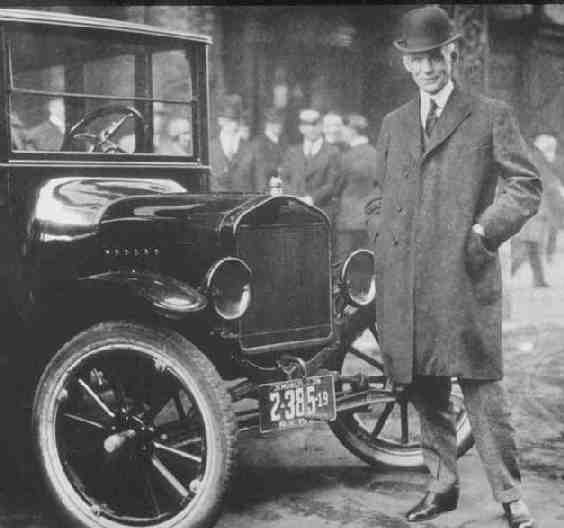
"A business that makes nothing but money is a poor business."
Henry Ford, industrialist (1863-1947)
Interesting, that. It seems that this is the goal of almost all companies, these days. . . . Talk about "something for nothing"!
Thursday, July 31, 2008
contractors - one line
What is it about contractors that makes them so confident that it's the plans that are all wrong, and not the fact that they didn't follow the plans?
[Having built the stove hood/fan according to his own devices - in blissful disregard of the plans provided - our builder now wants me to revise the custom kitchen to fit the stove hood. 'Nuff said.]
Tuesday, July 8, 2008
thought: values for sale

You can tell the ideals of a nation by its advertisements.
Norman Douglas, novelist (1868-1952)
What national "ideals" are we pursuing these days, I wonder? Freedom of travel, back to the garden of eden, search for the fountain of youth - yes - but also the triumph of myself over all [i.e., self as tyrant], endless pleasure, endless wealth, endless power, because I deserve a break today, I'm worth it, I'm just going to do it, because I'm set to be all that I can be.
Wednesday, July 2, 2008
deep Google thoughts
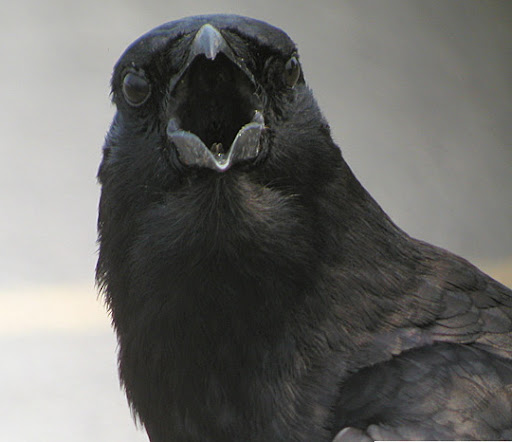
Google and Deep Thoughts?
I know Jack Handey [yes, he's a real, live, person] and I have a little bit of an idea just how much time, effort, and thought goes into one of his little "Deep Thoughts", so popular from the old Saturday Night Live days. And no - sorry - I'm not going to give you all the little links to go check it out. If you're interested, at some point I'm sure you'll 'google' it. . . .
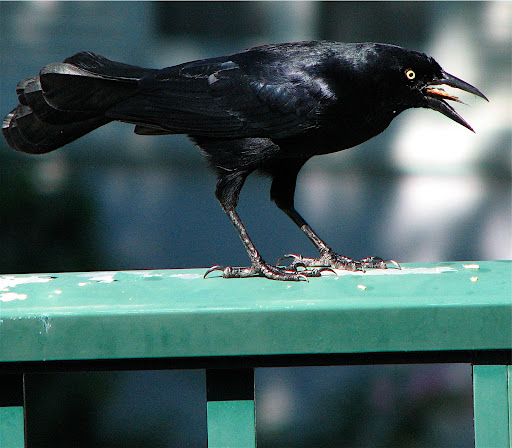
Even now, I'm listening to a crow cawing outside and giggling over today's "Deep Thought" on Jack's website:
"The crow seemed to be calling his name, thought Caw."(these 'thoughts' sometimes creep up on you - that one took me just a moment. . . . grin!)
Today, I came across a really interesting article that asks the question Is Google Making Us Stupid? by Nicholas Carr.
Read the article. See if - like Carr; like ME, embarrassed as I am to admit it - you aren't also experiencing a growing difficulty reading longer articles. Carr's is only 4000 words, but I noticed - because I was thinking about it - how often I started casting about looking at something else, considering scanning to the end, clicking another link, or checking email real quick in between. The article is well-written - that's not the problem - and there's plenty of interesting thoughts, facts, and other information that is presented, all the way to very end. Perhaps particularly towards the very end, as Carr investigates whether Google is perhaps teaching us to think differently.
Although he doesn't mention the book, Carr would find a similar thesis in Neil Postman's Amusing Ourselves to Death, which tracks a similar shortening of attention span. It was first published in 1985, and related to the shift from the written word (or even the heard word in the sense of the radio or lecture) to the television. Carr's observations take Postman's earlier work the necessary step further, with a more chilling prognosis.
What particularly hit me is an observable lack of sustained thought, let alone sustained discussion and discourse. And deep? Fuggetaboutit. . . .
One couple I particularly admire has afternoon "study halls" at their house. Friends are welcome to come and sit and read or write - and ask the occasional question or read the quick, amusing, quote - from, say 3 to 6, and then they mix a cocktail and sit and talk together about what they studied or thought about, or wrote all afternoon. They are a rarity and they are not often joined by others.
That, however, is how I aspire to live.
Unfortunately, checking email and googling how to make whatever I want to make for dinner tonight so often gets in the way.
As does a 4-month old puppy. . . .
Maybe I should google what Cesar Milan would say about that.
Thursday, June 19, 2008
thought: the heart of crying
Tears are the safety valve of the heart when too much pressure is laid on it.
Albert Richard Smith, author and entertainer (1816-1860)
Wednesday, June 4, 2008

Wednesday, April 23, 2008
thought: theory vs. practice. . .
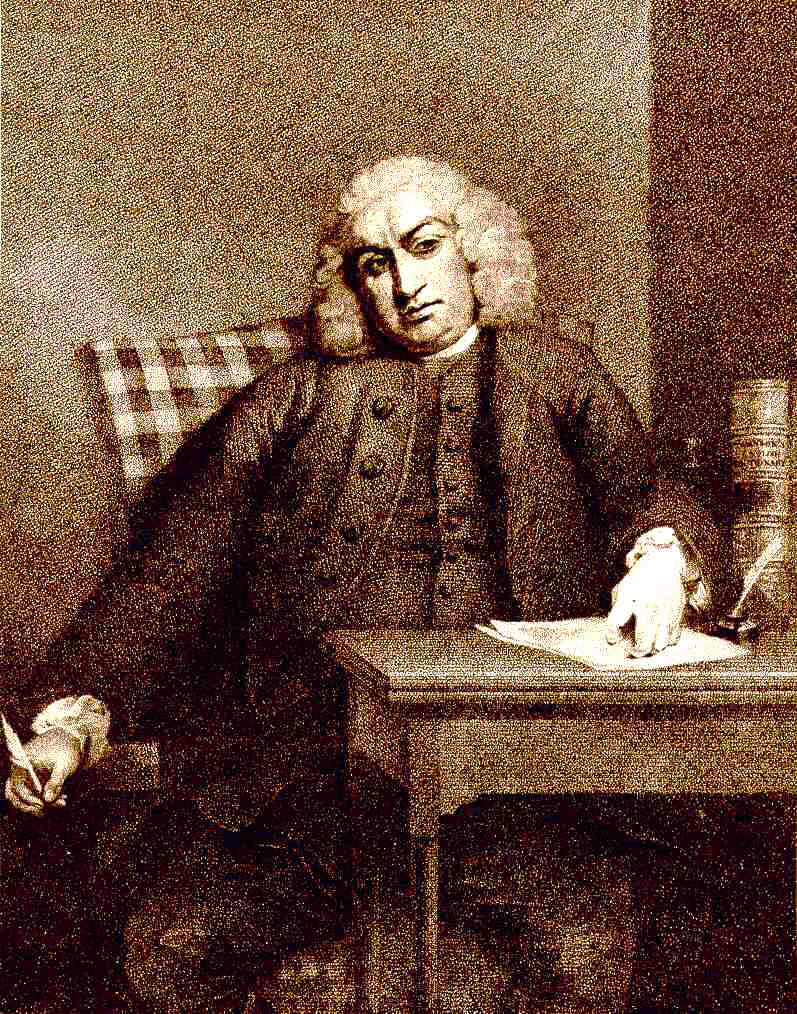
Be not too hasty to trust or admire the teachers of morality; they discourse like angels but they live like men.Samuel Johnson, lexicographer (1709-1784)
Tuesday, March 18, 2008
thought and action.

William James (1842-1910)
Act as if what you do makes a difference. It does.
This assumes, of course, that one is actually doing something - not just talking about doing something, talking about what others should be doing, or reacting to events, i.e., complaining about what others have done.
I like Wm. James. He's the same guy who refuted scepticism (and promoted 'faith') by saying:
Dupery for dupery, what proof is there that dupery through hope is so much worse than dupery through fear?
I wonder what he would make of the "believe" campaign. . . .
Friday, March 7, 2008
Monday, February 11, 2008
another view
 I have linked to this lady (Elizabeth Perry) before. She posts a sketch every day - and has been doing so now for a couple of years.
Today's sketch really helped pull my expectations of travel out of the gutter. How strange that a little pen, ink and colour wash could renew my excitement of the adventure and glamour of going overseas - my word! Here I've been, dreading it.
The crowds. The lines. The squalling children. The dirty seats, trays, tables and sticky armrests. The floors that don't bear close examination. The smells. The obnoxious people. More lines. Travel documents. Heavy burdens (why does paper weigh so much?!) Personal space invasions. Sleep deprivation. General anxiety about missing one's plane, or connection, or losing luggage or money or just in general. . . . general anxiety.
I used to travel very well. Elizabeth Perry's sketch has pointed me back towards what I used to know. I can still travel light, and expectantly.
I leave on Sunday.
Thursday, January 31, 2008
neutrality and oppression - the relationship
The answer to those in Ireland who are so proud of their "neutrality" and view it - somehow - as ever-so-superior to those who are not neutral. . . .
You remember Elie Wiesel, don't you? The Holocaust survivor who's written so powerfully about it.
But then the current "neutral" anti-war people seem to be supporting people who maybe don't think much about the Holocaust.
Neutrality helps the oppressor, never the victim. Silence encourages the tormentor, never the tormented.
Elie Wiesel, writer, Nobel laureate (b.1928)
You remember Elie Wiesel, don't you? The Holocaust survivor who's written so powerfully about it.
But then the current "neutral" anti-war people seem to be supporting people who maybe don't think much about the Holocaust.
Tuesday, January 29, 2008
bluebird of happiness

It must be the cartoons that have spawned that particular image. . . . Snow White, probably. Wasn't there a bluebird of happiness in that one, carrying the train of Snow White's gown?
Whatever.
I like bluebirds. Of course, I'd never seen an actual bluebird until a week ago, when I saw two of them, flying across a field just down the road from the greenwood. I have aspirations of luring them to the meadow in front of our [almost-under-roof] house. I understand they like peanut butter. And they prefer man-made housing, on stakes. Not too high up. I have just the thing.
But there's a problem. Someone told me not too long ago that bluebirds are territorial, and drive off all the other birds.
Is it true, do you think? Our bird-watching books have not mentioned it. It does say that they're 'gregarious' and can live in large family groups, especially over winter. That's not so bad! But it doesn't say anything about "plays well with other species". . . .
Hmmm. More research is needed, clearly. Luckily, I have time before I have to make a decision whether or not to court them. Moreover, just putting out the preferred feed and housing is far from a guarantee that my desired bluebird of happiness will materialize.
Meanwhile, I feel oppressed at the prospect of full-time "work" outside of my house (1), the moths that have [apparently] invaded my closet judging by the pinholes I keep finding in favorite sweaters and blazers (2), and legal cases involving money disputes (3).
I don't like money disputes.
I don't like disputes - not really. And yet I pick fights. Or maybe it's that I point out conflict. I dunno. . . .
Two of my go-to writer friends have been scribbling along these lines as well. Lee Anne at Adorable Device of Destruction - in her posting about a flattened culture of happiness - and Non-Essential Equipment, who apparently got some people worked up by posting about faith issues and the question of 'non-believability'.
More thought. Clearly needed.
Note to self: Without conflict, there is no story. "Happily ever after" marks The End.
Tuesday, January 22, 2008
money and freedom. . . .

I'm still working this sum out, but after how the stock market opened this morning (plunging some 400 points, whatever that means precisely, although I know it's not considered good) consider this thought by Robert Louis Stevenson:
The price we pay for money is paid in liberty.
-Robert Louis Stevenson, novelist, essayist, and poet (1850-1894)
In some ways, it's definitely true. Being in debt is like being in prison; it's a slavery. We give up our freedom to do other things and go instead to a job, or sit in front of a computer and write, or pack boxes, hammer nails, mind children. . . .
Isn't it ironic that we look to money to give us freedom?
Maybe I need to rethink that. . . .
Monday, January 21, 2008
body and soul. . . .
Nee, over at Non-essential Equipment, pointed to an article that she thought was "spot on" with respect to certain physical and cultural manifestations of moral sensibilities. I disagreed. To me, the article was little more than the attempt to reduce morality to a [not-completely-known-at-present] physical and/or sociological manifestation; an instinct. Here's what she wrote, and here's the article she referred to by S. Pinker. It's entitled The Moral Instinct.
Interestingly, today I read an article kind of from the "other side", in which a theologian makes the argument that we are more than our minds - that the body has something to do with our thoughts [and prayers] as well. Check it out - it's entitled "Thinking With Our Bodies", written by Mike Metzger.
How is it that I can so completely disagree with the one, and yet agree with the other? Aren't they really just approaching a similar conclusion, but from different perspectives? You know, I just don't think so.
I think it has to do with the question of responsibility - which in the one seems to be either lacking or sought to be restricted - but which in the other seems to acknowledge the potential of a greater richness in how we think, know, and decide, all the while leaving our individual responsibility in place.
I have a hard time with any kind of approach that would reduce morality to an "instinct"*. There is no trouble, however, for me to acknowledge that morality [or other kinds of thought and understanding] is influenced and/or enhanced by the physical and by our bodily experience.
One of my favorite quotes is from C.S. Lewis to the following effect [paraphrasing from memory here]:
But perhaps this merely demonstrates my own bias in favor of the metaphysical, and my disenchantment with the Enlightenment Project, by which man seeks to elevate human reason and understanding to ultimate status.
_______________________________
*C.S. Lewis has another great thought regarding instinct, and the fact that relying upon it does not advance our understanding of the underlying matter: "to say that migratory birds find their way by instinct is only to say that we do not know how migratory birds find their way". . . .
C.S. Lewis, The Abolition of Man (London: Fount Paperbacks, 1999 ed.)p. 21.
Interestingly, today I read an article kind of from the "other side", in which a theologian makes the argument that we are more than our minds - that the body has something to do with our thoughts [and prayers] as well. Check it out - it's entitled "Thinking With Our Bodies", written by Mike Metzger.
How is it that I can so completely disagree with the one, and yet agree with the other? Aren't they really just approaching a similar conclusion, but from different perspectives? You know, I just don't think so.
I think it has to do with the question of responsibility - which in the one seems to be either lacking or sought to be restricted - but which in the other seems to acknowledge the potential of a greater richness in how we think, know, and decide, all the while leaving our individual responsibility in place.
I have a hard time with any kind of approach that would reduce morality to an "instinct"*. There is no trouble, however, for me to acknowledge that morality [or other kinds of thought and understanding] is influenced and/or enhanced by the physical and by our bodily experience.
One of my favorite quotes is from C.S. Lewis to the following effect [paraphrasing from memory here]:
So much of what passes for godliness is nothing more than a proper digestion and a good night's sleep.It does not work the other way around, though, that what passes for a proper digestion and a good night's sleep is nothing more than godliness [or morality]. . . .
But perhaps this merely demonstrates my own bias in favor of the metaphysical, and my disenchantment with the Enlightenment Project, by which man seeks to elevate human reason and understanding to ultimate status.
_______________________________
*C.S. Lewis has another great thought regarding instinct, and the fact that relying upon it does not advance our understanding of the underlying matter: "to say that migratory birds find their way by instinct is only to say that we do not know how migratory birds find their way". . . .
C.S. Lewis, The Abolition of Man (London: Fount Paperbacks, 1999 ed.)p. 21.
Thursday, January 17, 2008
dreary = wrong
If your morals make you dreary, depend on it, they are wrong.Robert Louis Stevenson, novelist, essayist, and poet (1850-1894)
Now there's a thought for you!
Granted, I think it's a dangerous thought for someone trying to talk himself out of doing the right thing. . . . but it's a freeing thought for someone chained to a deadening sense of duty; it's an ennobling thought for someone facing trying times.
Dreary sacrifice or courageous over-the-top gift?
Dreary attendance or breathless assignation?
Dreary shouldering of a burden or joyful embrace and carrying off of a prize?
We get to choose. Somehow. And yes, yes, yes: I recognize that I am dealing here more with motive rather than a so-called moral "content." Morality is not the same thing as rules.
Friday, January 11, 2008
thought: life and thinking
Life consists in what a man is thinking of all day.
Ralph Waldo Emerson (1803-1882)
I have often wondered what we would look like if what we thought were somehow visible on our face. . . . In a way, though, it is. After years of thinking ugly thoughts, does it not show in the habitual scowl or snarl lines some people seem to wear?

Sorry - don't mean to make a political statement here, but hers was the easiest scowley face to find. . . .
Hillary doesn't look so bad when she smiles.

But you can still see those scowl marks in between her brows.
Then there are others who make you feel real friendly before they've ever said a word. I think it's the smile lines.

Of course, it's not easy to get a picture of someone who has laugh lines when they're not actually smiling. . . .

OK - so that's how we hold our faces. Or how we translate emotion into physical experience: tight-shouldered tension, sweaty nervousness, the tingle and flush of attraction. . . .
How about the content of our thoughts? What difference between - say - the one who thinks of nothing but the details of his next gourmand feast, and the one who dwells on how best to feed and clothe the poor and hungry?
Or the one who is obsessed with what she looks like, versus the one obsessed with her garden? Or his car? Her music? His stockmarket portfolio? Her track record?
Not to mention things like war, peace, education, criminal law, ecology, animal welfare, politics, God. . . .
Who knew "life" could be so complicated?
Wednesday, January 9, 2008
protection. . . .

I need someone to protect me from all the measures they take in order to protect me.
-Banksy, street artist (b. 1974)
The quote reference is from Word-A-Day, which I've written about before. Ok, referred to - anyway - before. . . .
I don't know who vets their quotes - all I can tell you is that they say that this is something Banksy said. . . . Then again, having done a bit of research on this guy (I'd never heard of him - sorry!) it appears that he keeps his identity a closely guarded secret so how could one put quotes around anything he has supposedly said?
Said as "Banksy", anyway.
As usual, I digress.
I was interested in "protection" from the political perspective, as we enter the ramped-up campaign heading to the elections this fall. Just what is the government reasonably expected to do to protect individuals, and from whom and from what.
Your assignment today: think about that.
Do I need, want, or expect "protection" from my family? My neighbor? My elected official? The nearby-living different-than-me group? Here's another "Banksy" streetscape (the one above, by the way, is called "Ratapult". . . . The one below, if you can't read the text, says: "How do we solve the crisis of youth crime? How do we get these kids to kill the right people?"

Here's another interesting observation: check out just how many products and companies advertise that they protect us - or that we need their protection. The one that particularly galls me is the life insurance company that says their insurance will "protect" me.
Protect me?!
I don't think so.
Not unless that word means a whole new thing these days.
But hey - I've met a pretty cool thinker and image maker today already through this flight of fancy. I figure it's a good day, even if that's all that happens today. . . . But it's not even 10 yet. I've got some time, Lord willing. Maybe I should go eat some "protective" cereal and put on my "protection" face cream. Then I'll go read up on how the politicos now leaving New Hampshire are planning to "protect" me if I will vote for them in November.
This is serious business. I think it calls for one more Banksy. Somebody get me outta here!

Tuesday, January 1, 2008
what I learned. . . .
We should be careful to get out of an experience only the wisdom that is in it -- and stop there -- lest we be like the cat that sits down on a hot stove-lid. She will never sit down on a hot stove-lid again, and that is well; but also she will never sit down on a cold one any more.Mark Twain (1835-1910)
Actually overheard: "Oh I never read anymore. I had to read so much during the war [note: that would be the Second World War. . . .] that I said to myself when it was over that I would never read again."
This, from an 83 year old woman whose husband died a year ago. Her chief complaints? She's lonely (1); she's bored (2). But hey, she had a bad experience reading over 60 years ago so she's never gone back.
I don't understand.
Then again, there are probably equally ridiculous "lessons" I have taken to heart for myself, never questioning the ridiculousness of conclusion I have adopted from the experience I went through. I just don't see them. Or not yet, anyway. . . .
Subscribe to:
Posts (Atom)